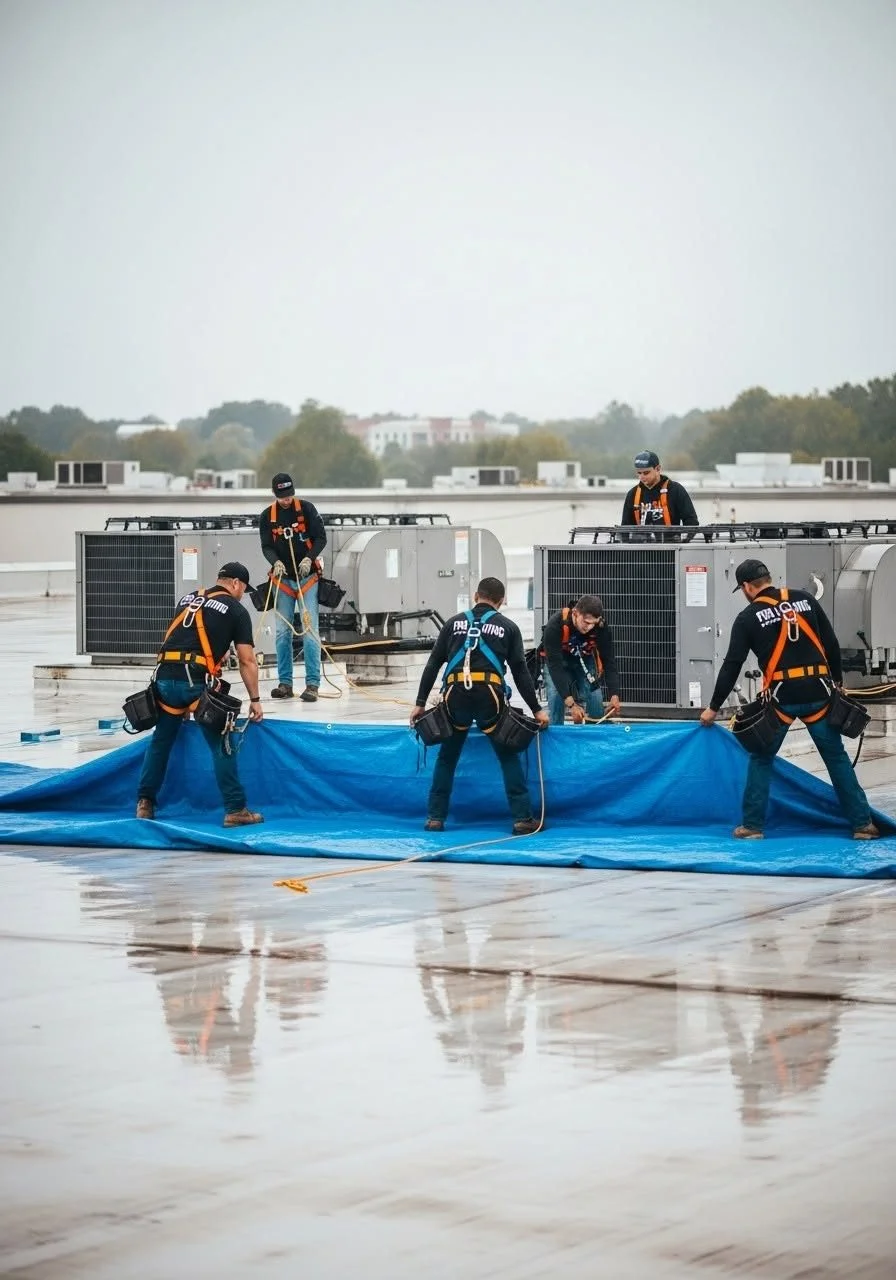
Severe Oklahoma weather can strike your commercial property at any time. High winds, heavy hail, and sudden storms frequently cause immediate roof damage. When your facility suffers a leak or structural compromise, you must act fast to protect your inventory, electronics, and tenants.
Temporary emergency roof tarping is the best way to prevent costly interior water damage while you wait for permanent repairs. However, commercial flat roofs require different techniques than residential sloped roofs.
When it comes to protecting commercial properties in Norman from roof damage, choosing the right tarping method is crucial. The debate between ballasted tarping and screw anchors is a common one, as each method offers distinct advantages and challenges. This article will explore these two options, helping you understand which is best suited for your commercial roofing needs.
In Norman, where severe weather can lead to unexpected roof damage, knowing how to choose roof tarping methods is essential. Whether you're dealing with a flat roof or a sloped one, understanding commercial roof tarping in Norman can save you time and money in the long run.
Understanding Ballasted Tarping
Ballasted tarping secures an emergency membrane using heavy weights instead of mechanical fasteners. This method is the industry standard for flat commercial roofs, such as TPO, EPDM, or PVC single-ply systems. Because it eliminates the need to puncture the roof, it preserves your remaining manufacturer warranty and avoids creating new leak points.
Instead of loose stones, professional crews use specific weighted materials to secure the perimeter and seams:
- Woven sandbags: Placed closely together to prevent wind uplifting.
- Rubber-padded concrete blocks: Cushioned to prevent scratching or tearing the underlying membrane.
- Cinder blocks: Positioned strategically over solid structural support beams.
Exploring Screw Anchors
Screw anchors provide a heavy-duty, mechanical fastening system for emergency commercial tarping. Instead of relying on weight, this method secures the tarp by anchoring it directly into the building's structural roof deck or parapet walls using specialized fasteners. This method is essential for sloped commercial roofs, metal panels, or structures that have already suffered severe wind deformation.
To prevent high winds from tearing the tarp fabric right off the screws, professional installers use a specific mechanical attachment method:
- Wooden furring strips: Wood termination bars are laid over the tarp edges to distribute the holding pressure evenly.
- Heavy-duty grip screws: Fasteners are driven through the wood and tarp directly into the underlying steel, wood, or concrete deck.
- Polyurethane or neoprene sealants: Waterproof sealants cover every screw head penetration to prevent water tracking into the deck.
Using screw anchors for commercial roof tarping in Norman is highly beneficial due to the severe, unpredictable high-wind events common in Cleveland County. Unlike ballasted weights, anchored systems will not slide or shift during intense storm fronts. The main trade-off is deck penetration. This method punctures the existing roof membrane, which can void active roof warranties and requires professional patch repairs once the temporary tarp is removed.
Comparing the Two Methods
When evaluating ballasted tarping vs. screw anchors for Norman commercial properties, asset managers must weigh immediate physical protection against long-term roof preservation.
Here is how the two emergency mitigation methods compare across critical operational categories:
- Installation Speed: Ballasted tarping is much faster to deploy because crews do not have to drill into the deck. This speed is vital when a sudden Oklahoma downpour threatens indoor inventory.
- Wind Resistance: Screw anchors offer superior wind uplift resistance. While a ballasted tarp can shift or lift during severe 60+ mph wind gusts in Cleveland County, an anchored tarp remains physically locked to the structure.
- Roof Membrane Integrity: Ballasted systems win on preservation because they require zero structural punctures. Screw anchors force fasteners through your roof membrane, meaning you will need professional membrane patching later.
- Long-Term Cost Value: Ballasted tarping has a lower initial labor cost. However, if a temporary tarp needs to stay on your building for weeks due to insurance or material delays, screw anchors prevent loose fabric flapping, which saves money by avoiding middle-of-the-night emergency service re-calls.
Best Practices for Commercial Roof Tarping
Commercial roof mitigation requires a higher level of safety and technical planning than residential jobs. Adhering to strict commercial installation protocols ensures your building stays dry and your structural integrity remains safe.
- Pre-Installation Load Assessment: Before placing any weights, a structural check is mandatory. Crews must ensure a storm-damaged or waterlogged roof deck can safely support the added dead weight of sandbags or concrete ballast blocks without sagging.
- Aerodynamic Perimeter Sealing: To beat high winds near Interstate 35, all tarp perimeters must be tightly sealed or weighted. If wind slips under the leading edge of the tarp, it creates a parachute effect that can rip the entire system off the building.
- Strategic Water Drainage Routing: Tarps must never block existing roof drains, scuppers, or cricket systems. Improperly placed tarps cause artificial water pooling, which multiplies the weight load on the flat roof deck and triggers severe structural risks.
- Scheduled Maintenance Inspections: Temporary tarps are not "set-and-forget" fixes. Commercial properties require routine visual inspections every few weeks—or immediately after any major Norman wind event—to check for fabric degradation, shifting weights, or loose fasteners.
Common Mistakes to Avoid
Commercial roof mitigation leaves zero room for error. Avoid these frequent mistakes to protect your building, tenants, and insurance claims:
- Using Under-Weighted Ballasts: Using too few sandbags or lightweight materials creates a massive hazard. High Oklahoma winds can easily displace the tarp, leaving your asset exposed and turning loose ballast blocks into dangerous projectiles that roll across and slice your roof membrane.
- Blocking Natural Roof Drainage: Laying tarps directly over scuppers, interior drains, or overflow drains blocks water flow. This causes immediate water pooling, which adds thousands of pounds of dead weight to a compromised deck and can trigger a catastrophic structural collapse.
- Neglecting Norman Building & Safety Codes: The City of Norman has strict safety and structural guidelines for commercial properties. Failing to follow code-compliant mitigation can result in city fines, forced structural closures, or the immediate denial of your commercial insurance coverage.
- Over-Penetrating the Roof Deck: When using screw anchors, driving fasteners blindly into the deck can puncture underlying electrical conduits, HVAC lines, or refrigeration piping. Professional commercial mitigation crews always map out the roof assembly infrastructure before drilling.
When to Call a Professional
If you're unsure about the best method for your commercial roof tarping needs, it may be time to call in the experts. Roof Tarping Pros Norman specializes in providing tailored solutions for all types of roofing systems. Their experience can help you make the right choice for your property, ensuring it remains protected from the elements.
Choosing the right tarping method for your commercial property in Norman can significantly impact its resilience against weather damage. If you're looking for expert assistance, contact Roof Tarping Pros Norman today.