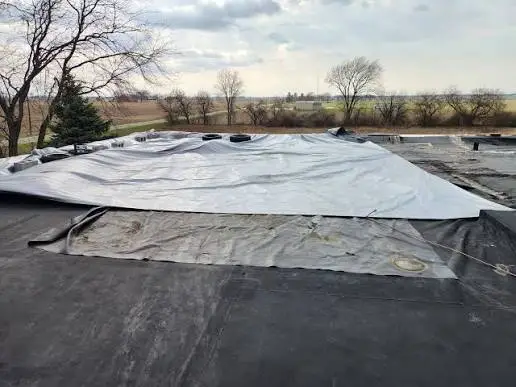
Standing water is one of the most destructive threats to a commercial facility's structural integrity. On a low-slope or flat roofing system, any water that remains on the surface for more than 48 hours after a rainstorm is technically classified as "ponding water." In Norman, Oklahoma, intense seasonal cloudbursts can dump inches of rain in under an hour, putting immense pressure on your drainage infrastructure. If this water cannot escape, it rapidly breaks down your outer roofing membrane and triggers severe internal asset risks.
Ignoring standing water on a commercial facility can lead to ruined inventory, electrical room short circuits, and forced tenant structural closures. Before you can execute permanent drainage corrections, you must deploy immediate emergency stabilization.
High-tensile temporary roof tarping provides a rapid, waterproof dry-in solution that isolates the structural weak points and diverts water away from active interior leaks. This guide breaks down the hidden mechanics of flat roof water retention and explains how professional tarping stabilizes your facility in Cleveland County.
Understanding Flat Roofs
Commercial flat roofs are highly popular across Norman industrial zones because they maximize interior vertical space and provide a stable exterior platform for heavy HVAC equipment. Despite their name, these systems are never truly flat. To comply with modern International Building Codes (IBC) and City of Norman structural guidelines, a flat roof must feature a slight, calculated slope of at least one-quarter inch per vertical foot. This intentional slope is designed to shed water toward outer scuppers, interior collectors, or low-point roof drains.
When a building naturally settles on its foundation over several decades, the underlying wood, steel, or concrete roof deck can bend slightly under structural stress. This foundational shifting creates low spots, known as deflection basins, across the facility's roof line. When a severe Oklahoma thunderstorm hits, rainwater naturally flows directly into these newly formed low basins rather than traveling toward the building's drainage collectors, starting a dangerous cycle of water collection.
The problem multiplies quickly because water is incredibly heavy, weighing approximately 62.4 pounds per cubic foot. When hundreds of gallons of rainwater pool inside a deflected roof area, the immense weight causes the underlying metal deck or wood rafters to sag even lower. This structural sagging creates a deeper bowl that holds even more water during the next storm front. If this progressive dead-weight loading is not stopped using a professional temporary dry-in barrier, the roof deck can buckle or suffer a catastrophic structural ceiling collapse.
Common Causes of Water Pooling
Ponding water rarely happens due to just one isolated failure. On a commercial facility, it is usually a combination of architectural aging, shifting weights, and poor drainage maintenance. When intense Oklahoma storm fronts roll through Cleveland County, any small defect in your flat roof's engineering can quickly become a large reservoir. If this water stays on your membrane for more than 48 hours, it starts baking under the sun, causing the outer single-ply materials to rot and crack.
To stop leaks before they ruin your warehouse inventory or office drywall, you must understand what causes these low-spot pools to form:
- Structural roof deck deflection: Over several decades, the immense physical weight of commercial HVAC rooftop units can cause underlying steel beams or wood trusses to sag, creating wide basins that trap water.
- Debris-choked drainage infrastructure: Wind-blown leaves, twigs, dirt, and bird nests quickly block interior drains, overflow scuppers, and collector boxes, turning your flat roof into an open swimming pool during a downpour.
- Improper structural cricket installation: Crickets are intentional sloped insulation wedges built behind HVAC units and parapet walls to split water flow. If they are sized incorrectly, water hits them and dead-ends, creating massive pools.
- Degraded and buckled insulation boards: If a slow leak saturates the underlying polyiso insulation sheets, the boards soften and collapse under pressure, creating deep valleys beneath the TPO or EPDM outer membrane.
For businesses in Downtown Norman, understanding these causes is crucial for effective roof management.
How Tarps Help with Flat Roofs
You cannot install a standard temporary tarp on a flat roof the same way you do on a sloped residential home. Driving screws directly into a flat deck to hold down a plastic sheet will create dozens of new leaks. Instead, commercial crews utilize specialized flat-roof dry-in protocols. They span the entire pooling basin with heavy-duty vinyl membranes and secure the perimeter using non-penetrating weight systems or specialized termination bars that seal the active leak path without damaging your remaining manufacturer warranty.
Deploying a professional temporary barrier over a deflected or leaking flat roof provides critical operational and financial advantages:
- Stops active internal asset flooding: A properly applied membrane completely isolates the leaking area, redirecting water away from sensitive electronics, production machinery, and public retail spaces.
- Prevents catastrophic weight amplification: By sealing off the low spot and routing water toward functioning scuppers, a tarp prevents more rainwater from gathering in the deflection bowl, protecting your building from a deck collapse.
- Saves your existing commercial warranty: Using professional, non-penetrating ballasted weights to secure the patch ensures you do not violate your active commercial roof warranty while you arrange for permanent structural repairs.
- Immediate structural cost containment: Addressing commercial roof pooling problems in Norman with a rapid dry-in stops water from soaking your underlying insulation boards, which saves you thousands of dollars in full tear-off costs.
For businesses facing roof pooling problems in Norman, commercial flat roof tarping service provides immediate relief while longer-term solutions are arranged.
Best Practices for Flat Roof Maintenance
Managing a commercial low-slope roof requires an ongoing facility preservation strategy. Unlike residential pitches that shed water naturally via gravity, flat decks depend entirely on an uninterrupted pathway to their drainage points. If a facility manager fails to implement routine structural checks, small environmental changes will quickly turn into expensive building envelope failures.
To maximize the operational lifespan of your commercial single-ply membrane and avoid unexpected facility downtime near Interstate 35, follow this strict technical maintenance checklist:
- Schedule seasonal bi-annual inspections: Inspect the entire flat roof surface every spring and autumn, and immediately following any severe Cleveland County wind or hail storm, to look for membrane splits or open seams.
- Clear organic and wind-blown debris weekly: Remove accumulated leaves, twigs, dirt, and plastic trash bags from the roof surface, as these materials trap moisture and accelerate chemical membrane rot under the sun.
- Test and flush all drainage infrastructures: Pour water directly into your interior collectors, overflow scuppers, and downspout lines to ensure the pipes flow freely and have not been choked by internal dirt blockages or bird nesting.
- Track rooftop technician foot traffic logs: Keep a strict record of all HVAC repair teams, solar technicians, and satellite workers who walk on your roof, as dropped tools and heavy equipment boots frequently puncture TPO or EPDM layers.
By following these maintenance tips, businesses can reduce the risk of water pooling on their roofs, ensuring longevity and reliability.
Common Mistakes to Avoid
Managing ponding water on a flat commercial structure leaves absolutely zero room for error. Because flat roof membranes must act like a seamless, continuous swimming pool liner to keep your facility dry, using the wrong repair tools or delaying your emergency dry-in response will rapidly destroy your building's infrastructure. Avoid these frequent facility management pitfalls to protect your inventory, tenants, and commercial insurance coverage:
- Using standard residential retail tarps: Laying down a thin blue polyethylene tarp from a local hardware store is completely useless on a flat commercial roof. These cheap materials tear instantly on metal edges and allow standing water to seep right through the porous fabric.
- Fastening a temporary tarp with heavy bricks or blocks directly onto the membrane: Weighting down a patch with loose concrete blocks, rocks, or bricks without protective padding is a major mistake. The sharp concrete textures will rub against your underlying TPO or PVC membrane during high winds, slicing dozens of fresh holes into your roof.
- Puncturing active drainage valleys with mechanical screws: Driving screws or anchors directly into the center of a low-spot deflection basin to hold a tarp down creates permanent holes right where the water pools, turning a minor leak into a severe internal flood.
- Allowing small ponding basins to sit untreated: Ignoring a 1-inch deep puddle because it hasn't caused an indoor ceiling drip yet is incredibly dangerous. Standing water acts like a magnifying glass, concentrating heat and UV rays that crack the single-ply membrane and ruin your underlying polyiso insulation boards.
When to Call a Professional
If you notice persistent water pooling or significant damage, it's time to call a professional. Experts can provide a thorough inspection and recommend the best course of action. At Roof Tarping Pros Norman, we specialize in emergency roof wrapping in Norman OK and can help you address any issues quickly and efficiently.
Get help with Roof Tarping in Norman
If you're dealing with water pooling on your flat commercial roof, don't wait for the problem to worsen. Contact us at Roof Tarping Pros Norman for reliable and effective solutions. Call us today at (405) 279-0658.